
An in-depth look at pricing psychology and how perception, trust, and fairness influence customer behavior and pricing outcomes.
Continue reading

An in-depth look at pricing psychology and how perception, trust, and fairness influence customer behavior and pricing outcomes.
Continue reading
AI features are powerful—but pricing them wrong can kill margins and trust. At HelloAdvisr, we help startups design AI pricing models that balance compute cost, customer value, and predictability. Unlike traditional SaaS, AI introduces variable costs, unpredictable usage, and inconsistent perceived value. The right model depends on your product and audience: usage-based (tokens or API calls) fits developers, tiered bundles work for predictability, hybrid models balance recurring revenue with flexibility, and outcome-based pricing ties cost to results. The key is alignment—when pricing scales with delivered value, growth accelerates. Customers expect clarity, stability, and fairness: transparent metrics, predictable bills, and the ability to test before committing. Avoid hidden meters, vague “AI premiums,” or forcing sales calls without reason. The best AI pricing builds trust by explaining what’s charged and why. In a world of hype, clarity wins—because trust, not technology alone, drives adoption and sustainable growth.
Continue reading
For SaaS founders, billing frequency isn’t a back-office decision—it’s a strategic pricing lever that shapes churn, cash flow, and customer commitment. At HelloAdvisr, we help startups use monthly and annual billing intentionally, not reactively. Monthly plans lower risk and friction for new users, while annual plans improve cash flow, forecasting, and retention. The key is balance: lean too much on monthly and churn erodes growth; push only annual and conversions slow. Discounts for annual billing typically range from 10–20%, with “two months free” (16.7%) as a common anchor. Annuals reduce churn by giving customers more time to realize value, but only when paired with strong onboarding and clear success metrics. Design choices matter—default to annual, label savings clearly, and show monthly equivalents for transparency. Avoid “gotcha renewals” and make upgrades seamless. The best teams treat billing cadence as behavior design: use monthly for easy entry, then nudge satisfied users toward annual plans that boost commitment, retention, and cash efficiency. Done right, billing frequency becomes a growth engine, not a toggle.
Continue reading
One-size-fits-all pricing almost always backfires. At HelloAdvisr, we coach startups to design pricing for segments—not averages. Segmentation ensures your plans reflect the customers you want to grow with, not just a generic profile. The key is to segment by behavior and value perception, not just industry or size: what triggers signups, who uses your product daily, and who sees it as mission-critical. Each segment values different things—startups prioritize speed and predictability, mid-market teams care about integrations and ROI, and enterprises demand SLAs, compliance, and support. Your pricing should mirror these priorities and act as an identity signal, with naming that helps customers self-identify—like “Launch,” “Growth,” or “Enterprise.” On your pricing page, make segmentation obvious with toggles, labels, and clear upgrade paths. Companies that tailor pricing to defined segments see 10–25% higher win rates, feeding faster sales cycles and stronger retention. Price for the customers you want to keep, and your pricing becomes a growth engine, not a guessing game.
Continue reading
Bundling isn’t about cramming features together—it’s about telling a bigger value story. At HelloAdvisr, we help startups design bundles that reduce friction, simplify decisions, and create natural upgrade paths. The key is starting with customer jobs, not product lines: bundle features that solve real use cases or fill common gaps. Done well, bundles highlight outcomes, not add-ons—like Microsoft 365 or Amazon Prime, where each component is more valuable together. Effective bundles anchor on high-demand features, add margin-friendly bonuses, and frame pricing so the next tier feels like the smartest choice. Avoid traps like unrelated features, too many bundles, or over-discounting. The payoff is real: research shows bundles can increase revenue 5–15% and boost retention by making value obvious. Naming also matters—“Starter,” “Growth,” or “Enterprise” tiers help buyers self-select. Test bundles iteratively, track ARPU and upgrades, and refine based on feedback. The best bundles tell customers, “If I buy this, I’ll achieve that”—a narrative that drives both trust and conversion.
Continue reading
Pricing doesn’t begin with a number—it begins with the conviction that your product solves a meaningful problem for someone who values the outcome more than the alternatives. Willingness to pay isn’t what customers say they’d pay; it’s what your solution is worth in their world. At HelloAdvisr, we help teams turn WTP into a strategic asset by grounding price in customer psychology, behavioral economics, and the results your product enables. Start by uncovering value through interviews: what’s being displaced, what’s broken, and what success looks like. Quantify the impact in time saved, revenue gained, or risk reduced. Segment by value profiles—urgency, pain intensity, and mission-criticality—then listen for real-world signals across sales calls, usage, and churn. Test pricing the way you test product: frame value, try different tiers, measure behavior, iterate. Finally, align price with positioning; it should reinforce your brand, not contradict it. WTP moves as your product and market evolve, so build a system to keep learning. Behavioral research shows outcome-anchored, identity-based pricing can lift willingness to pay by 10–50%—and your growth should reflect that.
Continue reading
Have you ever seen a message that said “limited time offer!” and ended up purchasing something you never thought you even needed in the first place?
If you answered “yes”, then that company or brand has successfully used psychological pricing to motivate your impulsive purchasing nature into a sale.
Isn’t it incredible how the very same product applying different pricing techniques can greatly impact spending habits?
We complied 5 of the most useful – and not the most obvious – pricing psychology tactics that you need to know to create the right perceptions with your customers and increase your sales.
These pricing tactics are supported by research and help you to navigate the type of price communication and perception for your product with your customers.
The “Less is More” concept applies both visually and audibly.
Visually, the more symbols and digits your price tag has the pricier your 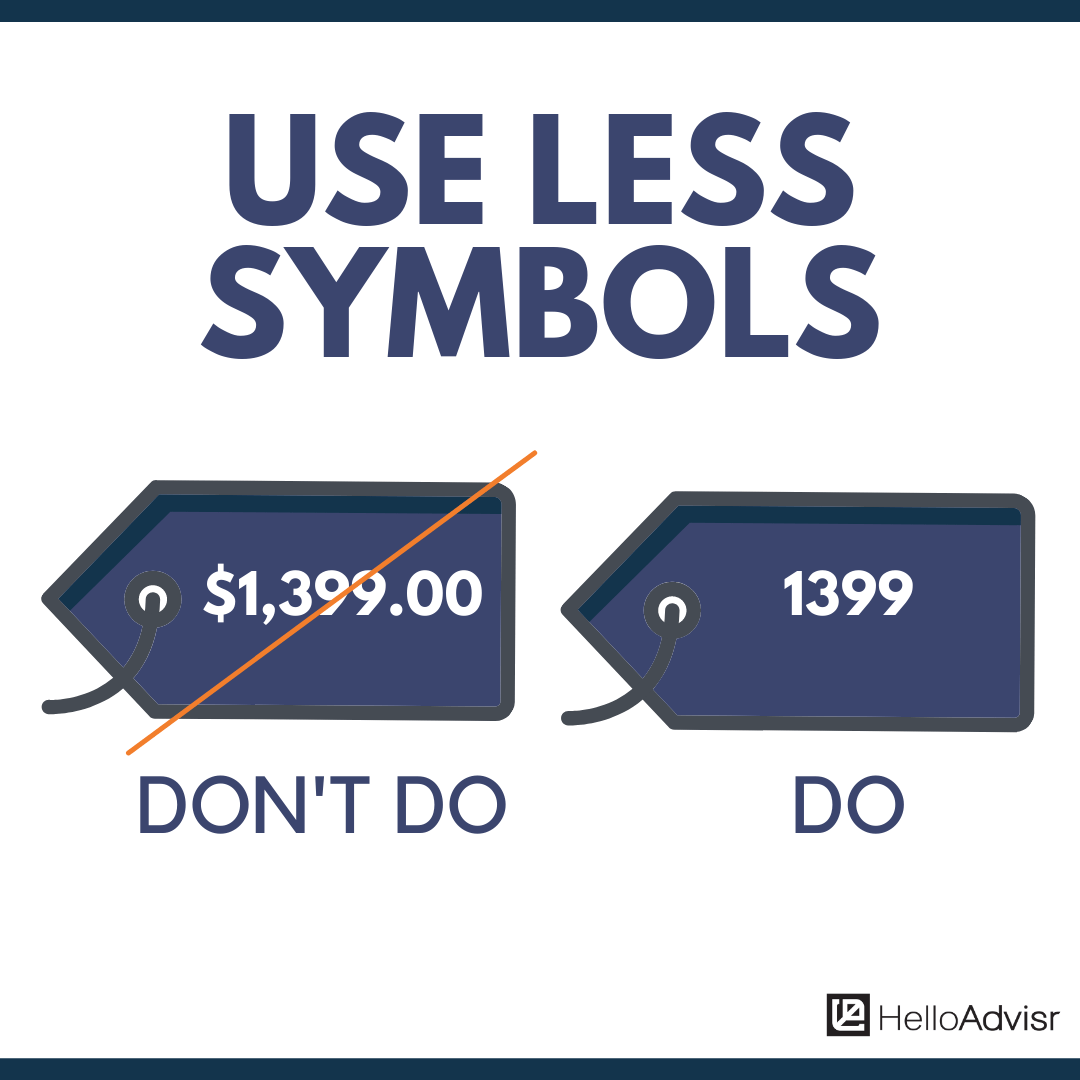 consumer assumes your price to be. For example, imagine you had a product priced at $1,399.
If you present the product price as “$1,399.00” it would be perceived as more expensive than if the same product had a price tag of “1399” written on it.
If a challenge is the price perception of your product is high or “expensive”, reducing the number of symbols or digits can be an easy way to shift perception with your customer.
Audibly, the more syllables the price contains 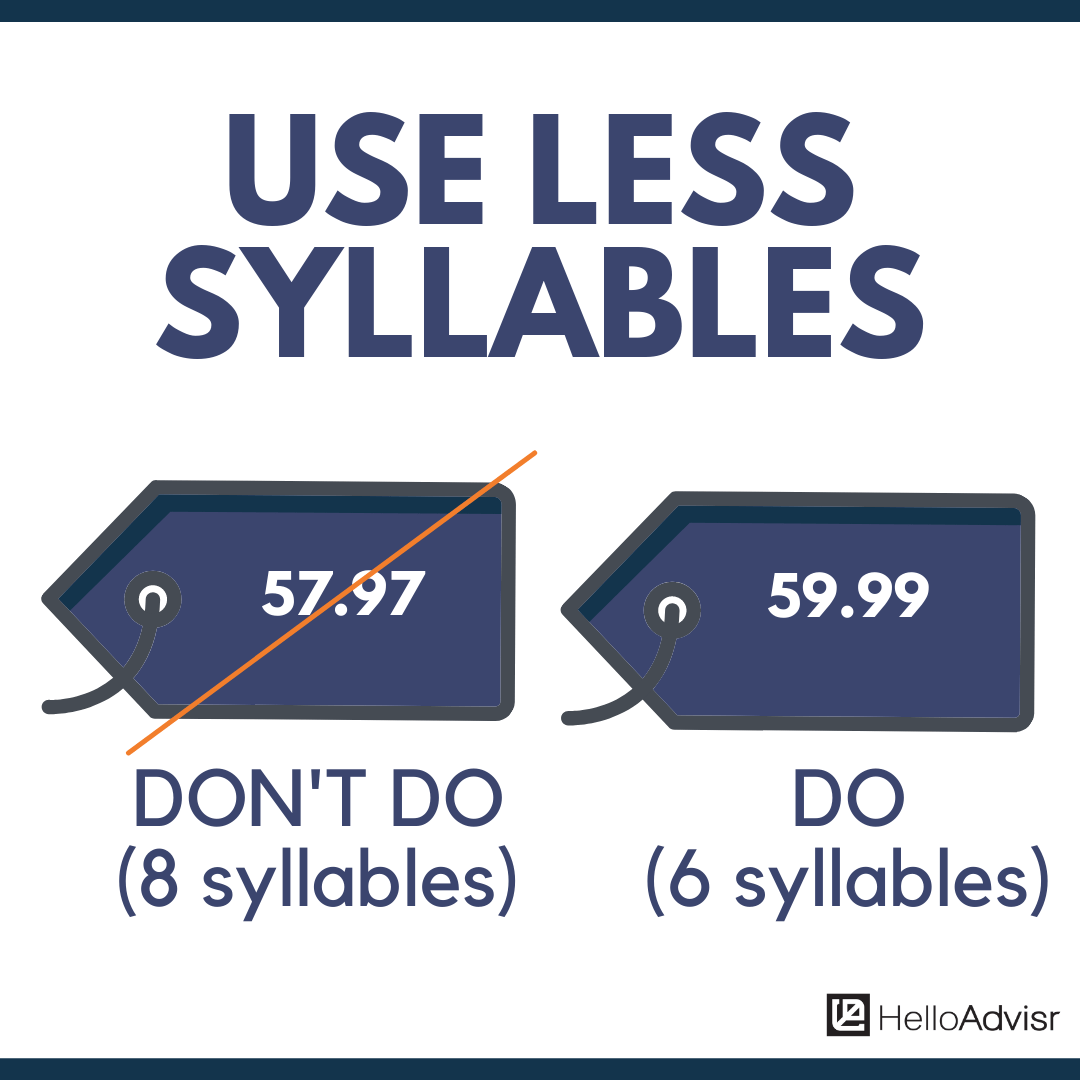 the more expensive it is perceived to be. In a study by researchers at Clark University and University of Richmond, researchers found a positive correlation between number of syllables and perception of how expensive a product is perceived.
Despite being the same in length, the study found that despite 59.99 being a higher number it is perceived as less expensive.
If you have been shopping any time this past month, odds are you have seen a sign or messaging that says something along the lines of “Today Only! BIG Sale!”.
In reality, these sales can actually occur pretty 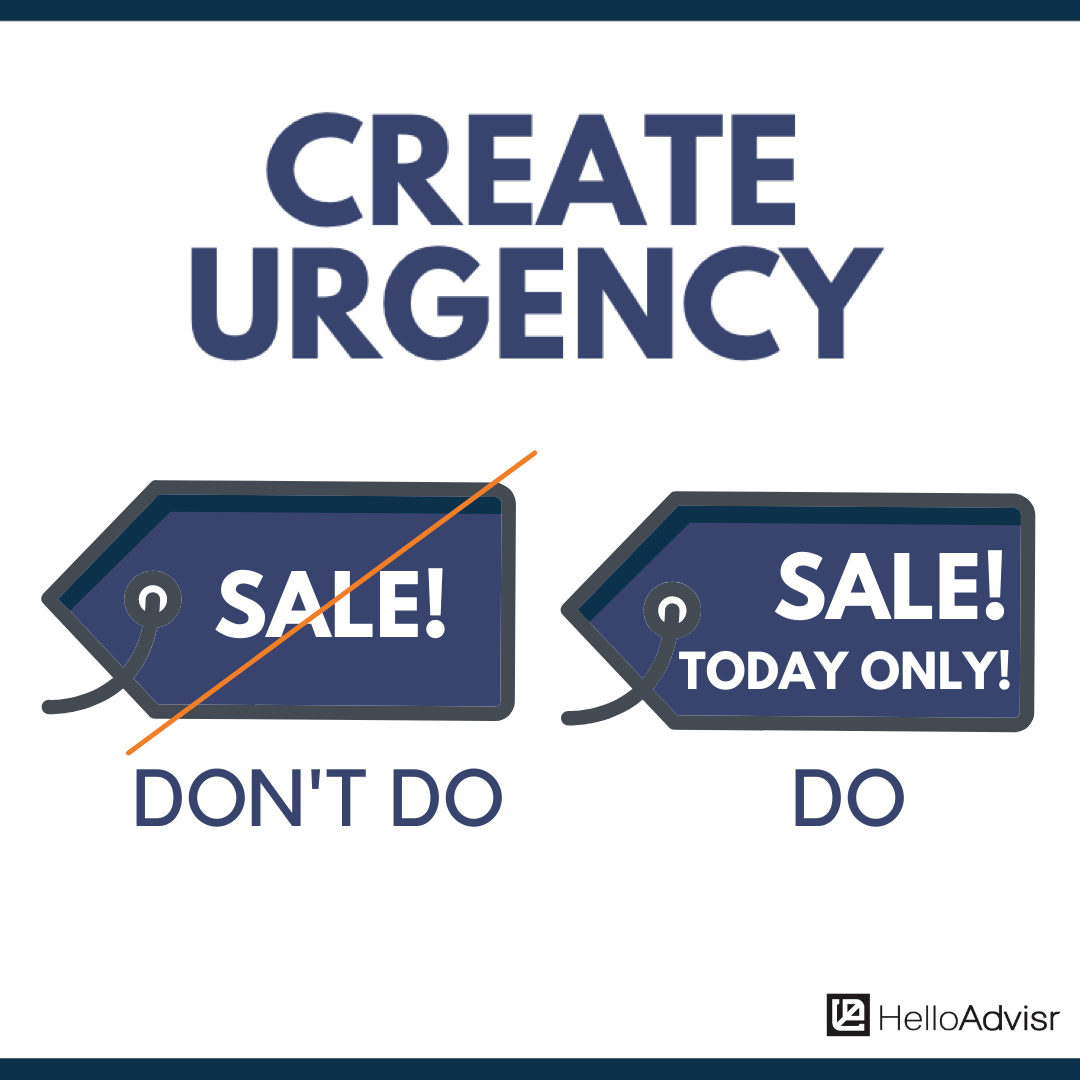 often but by creating this sense of urgency pushes you to spend money now. This taps into consumers’ pricing psychology. In this case consumers’ FOMO (fear of missing out) on an opportunity to save money and get a good deal. Equally powerful is the fear that everyone else got a better deal than you.
An infamous example that shows how well time constraint sales worked is the day that JCPenny decided to get rid of all their sales, which played an important role in the company’s 20% sales decline.
You can positively influence how your customers feel about more expensive options by placing your products in order of descending prices.
The effect of pricing order was tested by three researchers Kwanho Suk, Lee Jiheon and Donald R. Lichtenstein, who worked with a bar and changed the order of beer prices over a span of 8 weeks to find the sequence that maximized revenue. At the end of the research, it was concluded that pricing high to low would increase sales by approximately 4% for each beer sold.
The first reason that the researchers listed as contributors to why “high to low” pricing maximizes prices is that the initial prices create an anchoring effect. By seeing the higher prices first, consumers will use those prices to compare the rest of the list to.
The second reason was loss aversion, which is the human’s tendency to focus on losses. With pricing low to high consumers will perceive that they are “losing” the power to save money. While pricing high to low, consumers will feel like they are “losing” quality.
Pricing similar items at the same price can easily deter consumers from purchasing  the product.
This was demonstrated by a study done by researchers from Yale who found a 31% increase in purchases, from 46% to 77%, when identical items were given a slightly different price. In their study, they utilized two packs of gum which were both initially priced 63 cents each and then 62 cents and 64 cents.
When the prices of gum were different, it decreased the consumers’ need to spot differences and made the purchasing thought process more simple thus leading to more sales.
Consumers look for a deal and for some, this objective drives the pricing psychology and perception.
With the transaction utility effect, consumers are motivated by the potential of losing out on a “deal”. if the exact same product at the same price is offered to the consumer, the one with a “discount” label  can have a higher willingness to pay.
For example, if a retailer offered a chair but with two different offers. One offered the chair priced $100 dollars. For another offer, the exact same chair is also priced at $100 dollars but shows that the chair was discounted 20% from $125. In this scenario, studies have shown consumers would be more willing to purchase the second option – the chair on “discount” even if the price is the same.
This is similar to how the “timing constraints” technique works. As consumers are wary of missing out on a good deal, that is a core motivator and shapes price perception more than the number itself.
Companies with powerful pricing strategies leverage all pricing “senses” that best connect with your customers. This includes understanding your customer’s pricing psychology. This helps to focus your customers on the unique value-adding elements of your product, but also to align price perceptions with that value.
There are appropriate applications for each tactic. Time, place, frequency, and customer ring all should factor into how and when such tactics are used. Selective use can have an outsized impact on sales and perception. Here your strategy and research will always pay off when it comes to pricing.
These small changes can drastically impact your sales in the long run so consider exploring these simple changes to your pricing playbook!
Did you know? This article was originally shared to our email newsletter subscribers. If you want to get early access to articles, tools and updates signup for our free bi-monthly newsletter clicking here.
Sharing is caring. ❤️
Share this on social – super easy 1-click share buttons below 👇 – or send this article to a colleague or friend who can learn something new to empower their company or hustle.

